
The Row Brand Story The Row Ascot Bag
The brand’s Defining Materials and Craftsmanship, Unpacked
Rather than leaning on logos, The Row has spent more than two decades shaping a reputation on restraint, which is precisely why the brand’s method to fabrication deserves a closer look. When people search for the row, best row bags, or row handbags, they are usually chasing something particular: insight into why a plain leather tote or a spare shoulder bag can bear a price tag that stands toe-to-toe with heritage houses with a century of history behind them. The explanation lives in the particulars most shoppers never see — the tannage of the hide, the density of the stitching, the weight of the hardware — and in the rigor of a design studio that treats minimalism as the hardest possible standard to meet.
This article breaks down what really goes into the row bags and the row fashion as a whole, from the sourcing of raw materials to the finishing techniques that set apart a genuinely well-made piece from something that merely looks quiet. We’ll additionally explore how to shop smart, including where to buy the row margaux bag and what to expect if you’re browsing a row sale in 2026.
The Leather Standard: Sourcing and Tannage
The Row primarily uses vegetable-tanned and chrome-tanned calfskin, as well as lambskin for gentler silhouettes and select exotic leathers for limited releases. Vegetable tanning, a process that can take anywhere from 30 to 60 days based on the tannery, results in a more structured hand and a patina that the row bags fashion matures with age rather than splitting or flaking. That’s an intentional decision: the row bags are designed to be used for years, not seasons, and the leather is expected to soften and darken slightly with handling.
Where the leather comes from is just as important as tanning method. The brand has been known to work with European tanneries in Italy and France, regions that provide roughly 60% of the world’s premium leather goods per industry trade data. Hides are picked for minimal grain imperfection, meaning a substantial percentage of raw material is rejected before it ever reaches the cutting table. That exacting standard is unnoticeable at first glance but becomes obvious after two or three years of daily wear, when a lesser hide would already show cracking at stress points like handles and corners.
- Veg-tanned calfskin: firmer structure, forms patina over 12-24 months of regular use
- Chrome-tanned calfskin: more supple immediately, retains shape with lighter internal structure
- Lambskin: used for softer, slouchier silhouettes, lighter overall bag weight
- Exotic and limited leathers: released in limited quantities, typically priced higher
The Unphotographed Details: Hardware and Linings
Inspect any row handbags closely and you’ll spot that the hardware favor a subdued look — brushed rather than polished metal, usually unbranded, and level with the leather instead of protruding.
As much as it is a stylistic decision, this is also a build-related one.
Recessed fittings cuts down on snagging and wear over time, and unpolished finishes hold up against the kind of visible scratches that appears rapidly on shinier gold-tone fittings.
Interior linings typically lean toward a tightly woven canvas twill or suede, both favored because of durability under the friction of daily use as opposed to purely for looks. Stitch density runs remarkably high: many the row bag silhouettes use between 7 and 9 stitches per inch along load-bearing seams, versus a typical industry norm nearer 5 or 6 among mass-market leather items. This detail alone accounts for a meaningful portion of the labor cost baked into the price, given that tighter seams call for more deliberate, careful machine work and, in many cases, hand-finishing near the seam ends.
Why Simplicity Demands Greater Effort, Not Less Effort
It’s a frequent misunderstanding that understated design is cheaper to produce because it is missing embellishment. Reality points the other way at this level of craftsmanship. Every seam, edge, and proportion must be perfect, because no imperfection can stay hidden, as there’s nothing in the way of fittings, patterns, or ornamental stitchwork to distract the eye. To illustrate, the edge-paint finish on the row tote bag styles is usually applied in several fine layers and smoothed between applications, a process that can contribute hours to a single bag’s build time relative to a folded or raw edge finish.
The Row Handbag Collection Snapshot: Construction and Signature Cuts
A useful row bags overview starts with recognizing that the brand organizes its handbag output around a handful of core shapes that recur season after season with only minor updates, rather than chasing trend-driven releases. This is unusual in an industry that typically refreshes bag lines twice a year to drive urgency. The Row’s approach instead builds long-term recognition through consistency, which is part of why resale value on the top row bags has remained comparatively strong.
The structured trapezoid shape, understated external fittings, and a top handle reference to old-style doctor’s bags all define the Margaux—arguably the brand’s most iconic shape. Shoppers frequently ask where the row margaux bag can be purchased, and the candid response is that supply is intentionally restricted: it’s sold through The Row’s own flagship stores, its official website, and a small number of authorized luxury retailers. Both the bag’s desirability and its resale performance are heightened by this intentional scarcity.
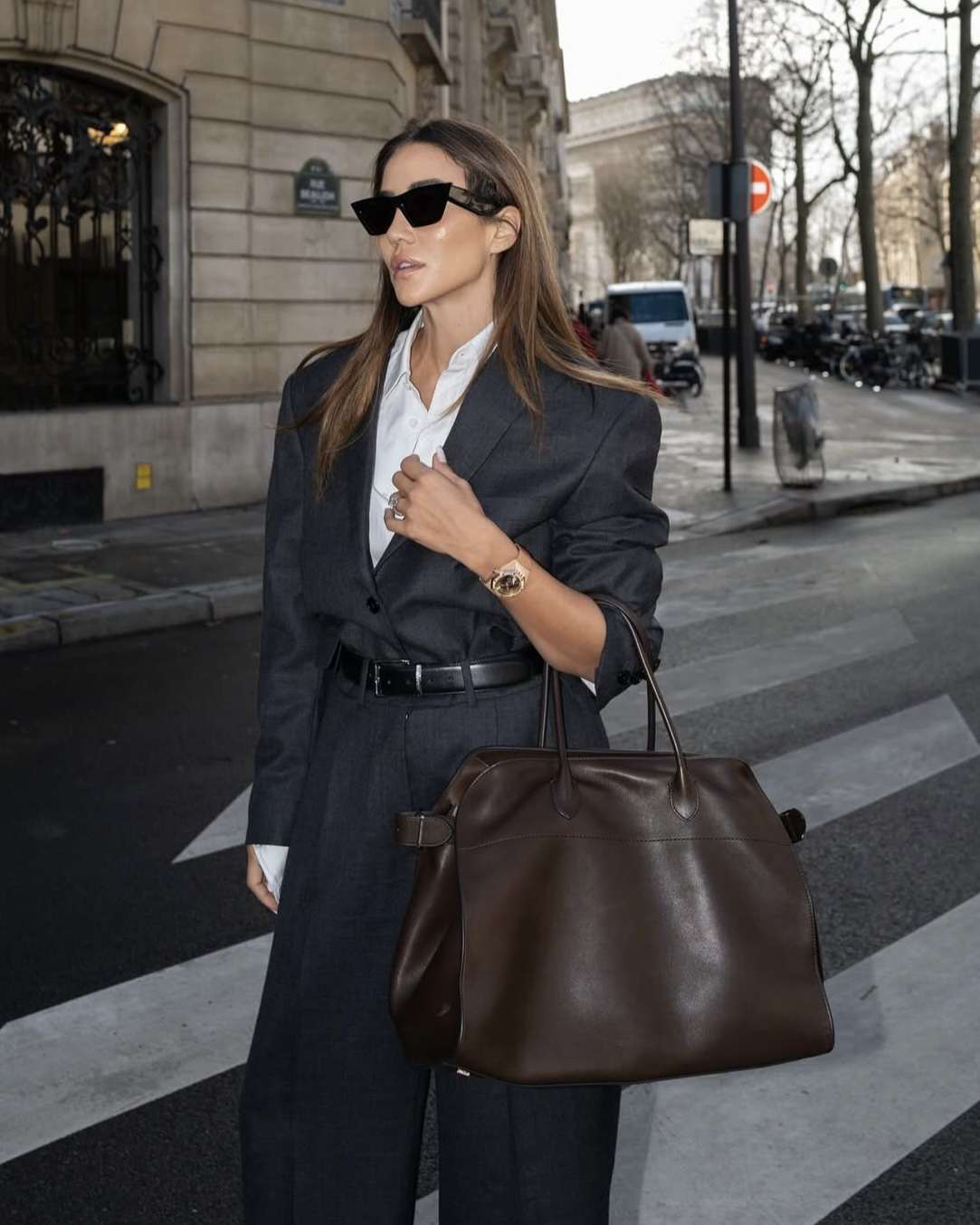
- Margaux: clean-lined trapezoid silhouette, top handle, found in a range of sizes
- Sofia: softly shaped tote form with minimal outer stitching
- Wander: rounded, more relaxed tote form well matched to day-to-day wear
- Ascot: small-scale top-handle bag with a more architectural profile
A Look at How Construction Differs Among the Leading Shapes
Within the row handbags lineup, four widely discussed shapes are summarized in the table that follows for their general construction characteristics. These are general descriptive notes based on design details available publicly rather than precise specs, since precise measurements and pricing shift according to the material used and time of year.
| Silhouette | Main Leather Type | Metal Detailing | Best Suited For |
|---|---|---|---|
| Margaux | Naturally tanned calfskin | Low-profile, brushed-finish hardware | Firm-shaped daily tote use |
| Sofia | Chrome-processed calfskin | Understated, set-back | Softer, slouchier carry |
| Wander | Soft calfskin or lambskin | Low-key closures | Lightweight routine errands |
| Ascot | Vegetable-tanned calfskin | Rigid top handle | Refined, workwear-appropriate look |
Being a Savvy Shopper: The Row Markdown Moments and Secondhand Market Notes
Because the row fashion rarely discounts through conventional promotional cycles, a genuine row sale is worth paying attention to when it appears, typically during seasonal transitions at select department stores or through the brand’s own periodic markdowns. Unlike fast-turnover labels, The Row avoids leaning on regular discounting to clear stock, so discounts when they do occur tend to correspond to end-of-season transitions rather than excess inventory.
When shopping a row sale, prioritize checking build quality in person or through high-resolution retailer photos: the tightness of stitching, uniformity of edge coating, and how well the hardware lines up are the quickest signals of genuineness and craftsmanship level. Secondhand and resale markets have also grown significantly for the row bags, with marketplaces dedicated to authenticated designer resale noting robust resale worth on core silhouettes like the Margaux, often holding 60-75% of original retail price within the first two to three years, varying with condition and colorway.
Care Practices That Preserve Value
Proper care extends both the durability and resale worth of any bag from the row. Veg-tanned leather responds well to treatment every 6 to 12 months according to climate and usage frequency, choosing a conditioner free of heavy silicones so as not to disrupt the leather’s natural aging process. An upright storage position with light interior padding helps prevent creasing, especially relevant for more structured styles like the Margaux and Ascot.
- Treat veg-tanned leather every 6-12 months
- Keep bags in an upright position with gentle internal padding to maintain shape
- Avoid direct sunlight exposure for long stretches of time, which speeds up color loss
- Wipe down hardware with a dry, soft cloth rather than chemical-based polish
Closing Notes on Craftsmanship as the Ultimate Deciding Element
Throughout The Row’s output, it’s construction quality — not branding — that holds the worth. Every stitch count, tannage choice, and hardware finish reflects a design ethos built around longevity instead of seasonal turnover. For those sizing up top row bags versus other luxury alternatives in 2026, the best method is to assess build quality firsthand — stitch density, edge finishing, leather tannage — rather than relying on price alone as a proxy for craftsmanship. That’s ultimately what separates a bag that ages gracefully over a decade from one that simply looks good in a single season.